View All+13 photos
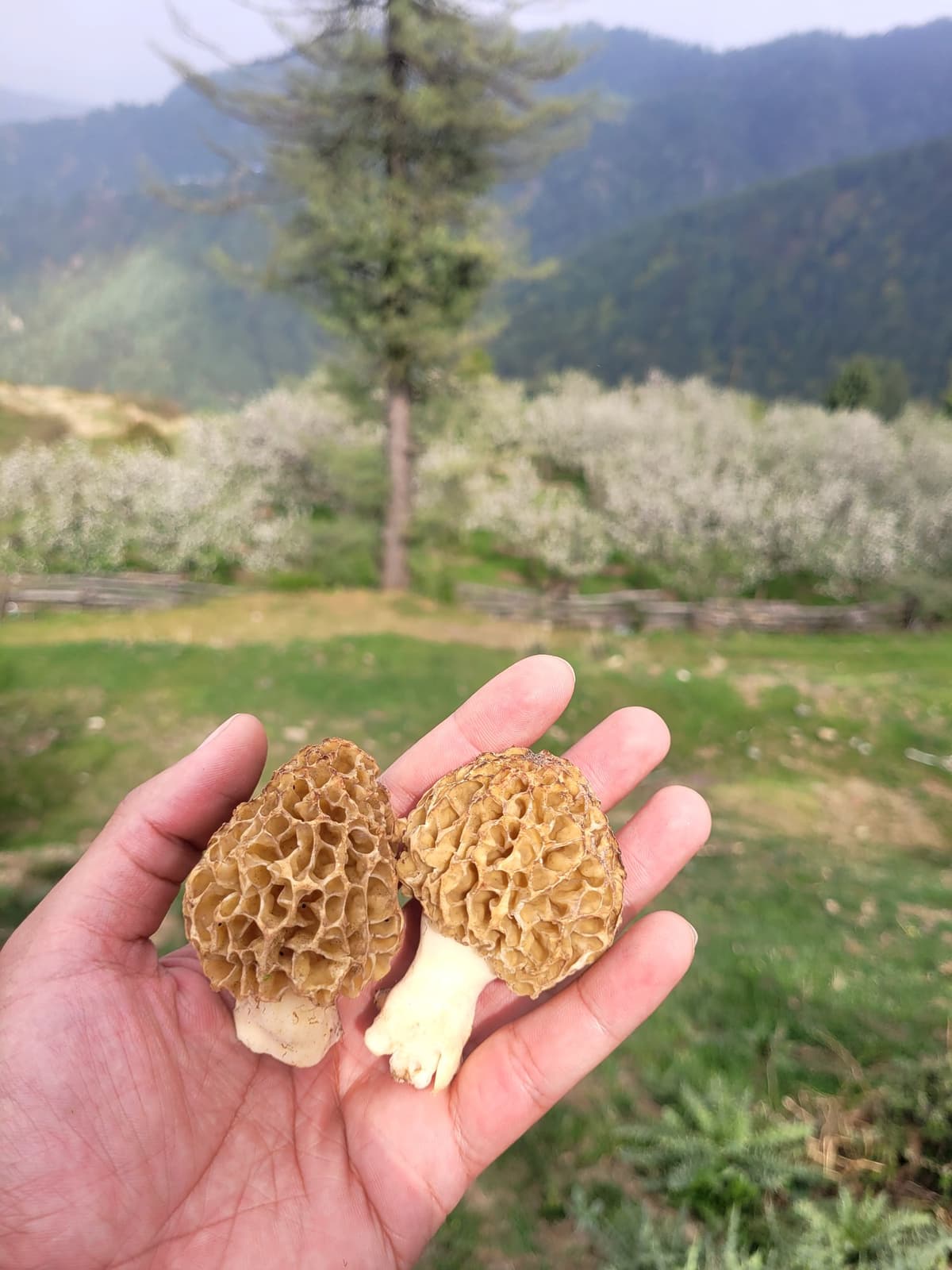
Two seasons, two harvests. Morels after the spring snowmelt, the wild flush after the monsoon. Walk the forest with someone who knows what's safe to pick.
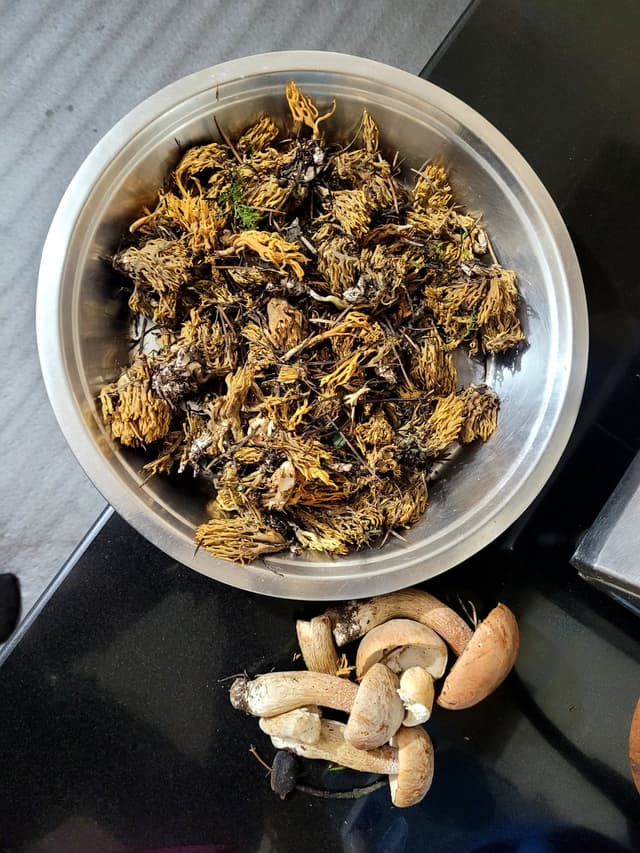
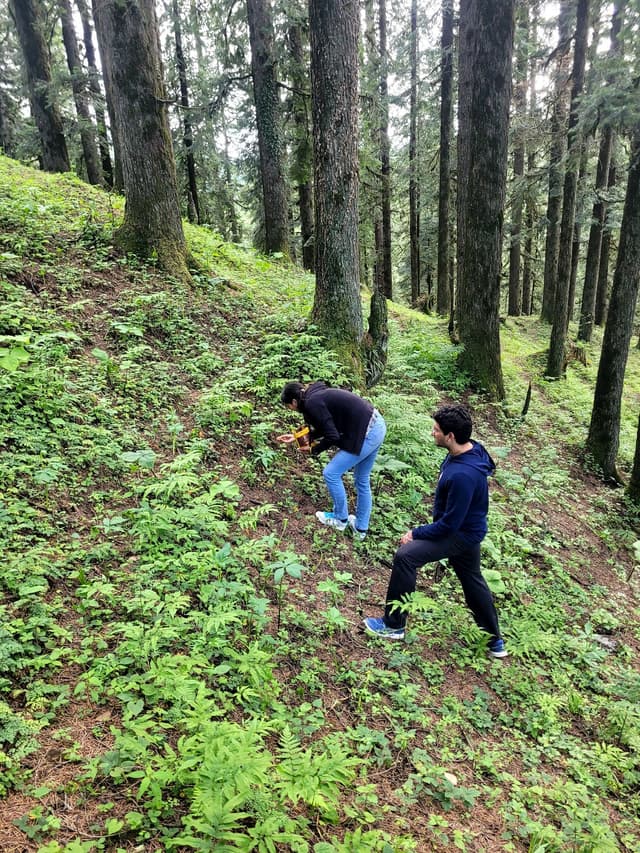
This is not a hike you measure in kilometres. It is a slow day on the forest floor, reading the trees, the soil, and the light to find what is growing. The Himalayan forests around Deorighat and Kharapathar produce two completely different harvests across the year, and we run this in both windows. In March and April, once the snow melts off the higher slopes, we go after morels - guchhi - the honeycomb-capped mushroom that hides under oak and conifer and sells for a small fortune in the markets. Then in July and August, after the monsoon soaks the ground, the forest throws up a wild flush: golden chanterelles, chicken of the woods bracketing the dead oaks, coral mushrooms, elfin saddle, and fiddlehead fern (lingdu) unrolling along the streams. I take a small group to a patch I have walked for years, show you how to actually look, and teach you which ones are safe and which look-alikes will ruin your week. We forage only what we will cook and eat - no stripping the forest. Run it as a full day out of Shimla, or stay a night nearby so we can be in the forest early when the light and the finding are both best.
Send a message through the enquiry form and tell me which season you want - spring morels or the monsoon flush. The two are completely different forests.
Foraging runs on the forest's calendar, not ours. I add you to the list and message the moment the window opens - morels after the snowmelt, the wild mushrooms a week or two into the monsoon. Small group only, 4 to 6 people.
Before the day I share the meeting point, what to wear, what to bring, and a short primer on what we are likely to find - and the toxic look-alikes to never touch.
We spend the day on the forest floor learning to read the ground. At the end we clean and cook what we have found together - the best way to understand a mushroom is to eat one you found yourself.
This is the easiest day we run. Expect 5 to 8 km of slow, off-trail forest walking over a full day, on soft and sometimes steep ground. There is no summit and no pace - we stop constantly to look. If you can walk comfortably for a few hours on uneven ground, you can do this.
Wild mushrooms are serious. Several Himalayan species have toxic look-alikes, and some are only safe when properly cooked. The whole point of going with a guide is that you never have to guess - I identify everything before it goes in the basket, and nothing unverified is ever eaten. Never forage these on your own from what you learn in a single day.
Share your dates and fitness level - I'll get back to you with availability and everything you need.
Enquire Now